
Powder filling resource centre

Technical guidance for specifying, testing and operating powder filling machinery.

Use these engineering guides to prepare a stronger enquiry, compare the right dosing route and define the evidence needed before a machine is accepted.

Start with evidence

Build the machinery decision around the real production condition.

Powder filling performance is shaped by the product state, the dosing principle, the pack and the way the line is operated. A useful specification therefore records more than a product name and target weight. It describes what changes between batches, what happens when the hopper is refilled, how the pack is presented and what the finished pack must look like.

The guides below separate the project into practical decisions. Use them together when preparing a quotation request or use the relevant guide to investigate one specific production issue.

Open the powder filler buyer guide
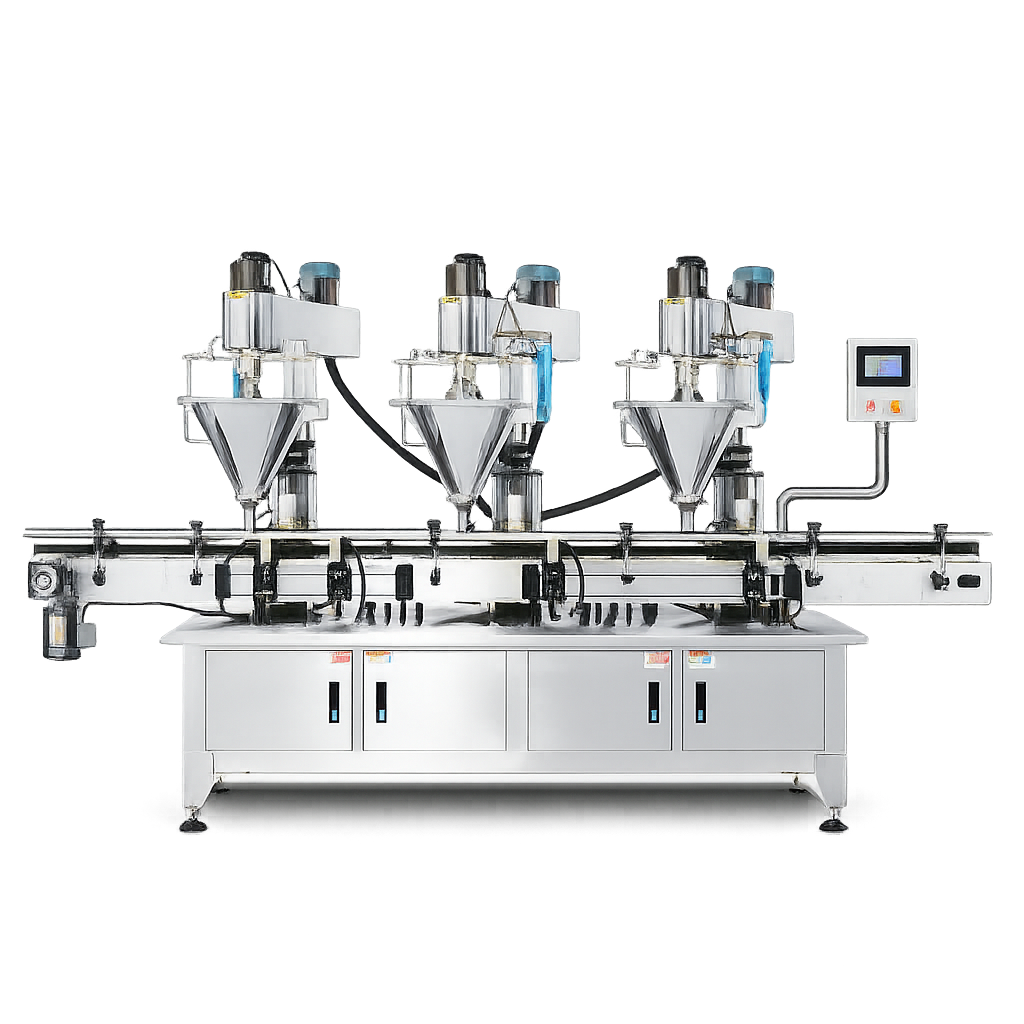
Automatic powder filling line with multiple filling heads and conveyor

Product and dose

Understand the material before comparing machines.

Flowability and bulk density

Identify bridging, flooding, aeration, compaction, segregation and density changes that affect hopper feed and dose volume.

Assess powder behaviour

Filling accuracy

Define the measurement method, sources of variation and a trial sequence that reports repeatability rather than a single best fill.

Plan accuracy checks

Machine comparison

Compare auger, weigh, semi-automatic, automatic and VFFS routes against the product and pack evidence.

Compare filling machinery

Cost and quotation scope

Understand how tooling, product feed, pack handling, controls, cleaning and integration change the project scope.

Review cost factors

Containment and changeover

Design the process around dust, cleaning and the next product.

Dust control

Map dust release at transfer, hopper charging, filling, settling, sealing and cleaning, then confirm the competent risk assessment required for the product.

Plan dust control

Cleaning and changeover

Define the contact-part boundary, disassembly sequence, product segregation and first-off approval needed between SKUs.

Plan changeover

Food powders

Review ingredient behaviour, hygiene boundaries, allergen considerations and pack formats for dry food products.

Review food powder filling

Chemical powders

Bring the current safety data, compatibility requirements and containment boundary into the machinery review.

Review chemical powder filling

Proof and implementation

Prove the application before the specification is frozen.

Product trial and FAT

Agree samples, settings, challenge states, acceptance criteria and the records that must accompany a successful test.

Build the test plan

Installation and site readiness

Check access, footprint, maintenance clearances, utilities, extraction, controls and upstream or downstream interfaces.

Prepare the site

Troubleshooting

Use symptom, timing and measured evidence to isolate product, tooling, feed, pack or line-state causes without bypassing safeguards.

Diagnose common problems

Complete line planning

Connect bulk feed, dosing, pack handling, closing, coding, inspection and finished-pack discharge as one controlled route.

Plan a complete line

Application routes

Continue by pack or product family.

These pages group searches where the engineering requirement is genuinely different. The final machine still depends on a representative product and pack review.

Research pathRelevant pagesMain decision
Rigid containersBottles, jars and tubsOpening, usable volume, fill height, stability, headspace and closure cleanliness.
Flexible packsPowder pouches, premade pouches, sachets and VFFS bagsPack presentation, dose timing, product settling and protection of the seal area.
Food and nutritionSpices, flour, protein powder, milk powder and coffeeFlow, dust, hygiene, flavour or allergen changeover and finished-pack quality.
Industrial and cleaning productsDetergents, cleaning powders and chemical powdersSafety data, containment, material compatibility, abrasiveness and segregation.
Production scaleSmall machines, tabletop fillers, semi-automatic and automatic linesOperator cycle, sustained output, refill method, changeover frequency and integration.

Buyer questions

Questions about powder filling technical guidance

Where should a powder filling project start?

Start with a representative product sample, the complete fill range, the pack opening and usable volume, the required saleable output and any known dust, cleaning or flow problems.

Which guide helps compare auger and weigh filling?

The flowability and bulk-density guide explains the observations that usually separate controlled auger dosing from weight-based filling and other routes.

How should machine accuracy be checked?

Agree the measurement method and acceptance criteria before the trial, then record consecutive results through start-up, normal running, refill and stop-and-restart conditions.

Does a machine trial replace a site assessment?

No. A product trial can prove dosing and pack behaviour, while a site assessment confirms access, utilities, layout, extraction, guarding and integration requirements.

Can Lancing review an existing powder filling problem?

Yes. Send the product, pack, machine details, settings, measured results and a clear description of when the problem occurs so the issue can be narrowed methodically.

Turn the guidance into a machine shortlist.

Send the representative product, fill range, pack samples, output target and the operating constraints that matter to your production team.

Request a powder filling review
Call now