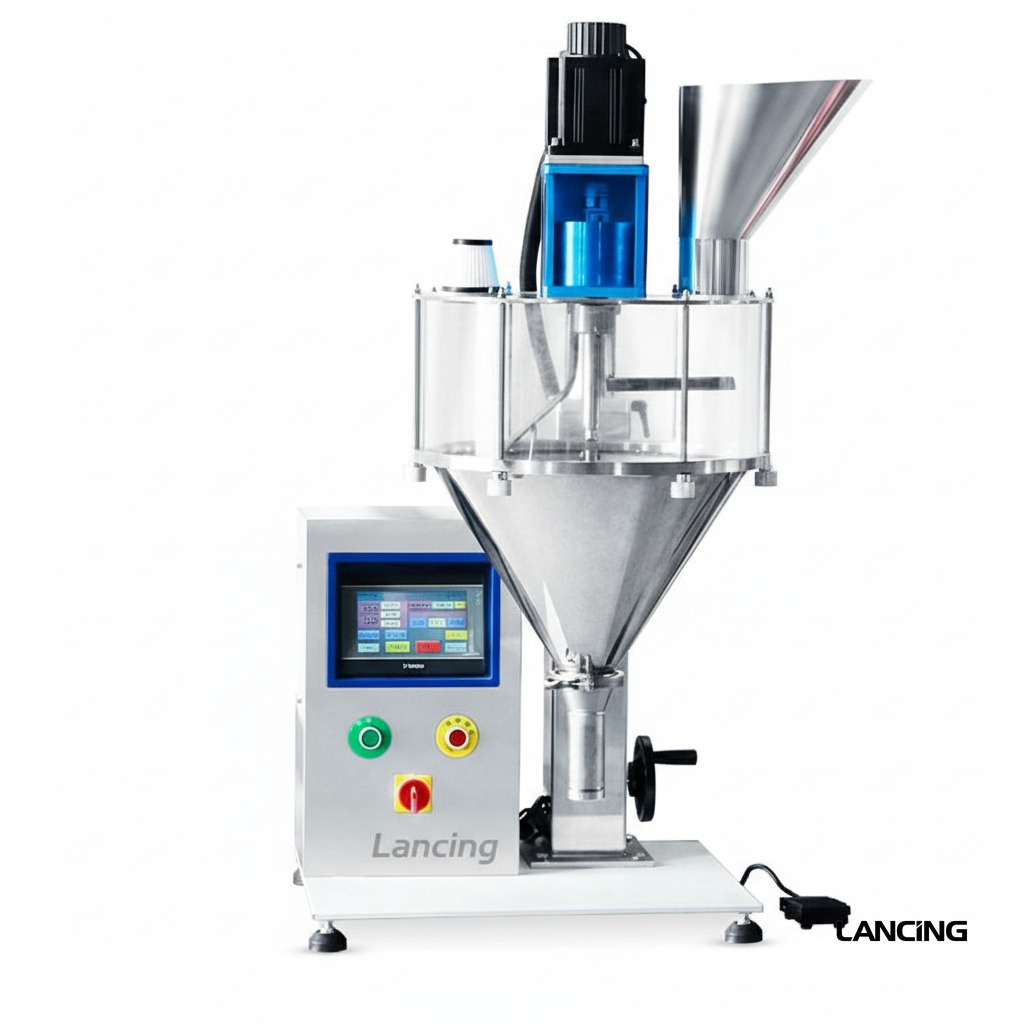
Treat the operator method as part of the filling process.
On a semi-automatic machine, the operator may present the container, initiate the cycle, remove the filled pack and complete a separate closure or weight check. Define the normal sequence, container support, hand positions, fill height and how the operator responds to a short fill, dusting or a misplaced pack. The quoted output should include these real movements rather than the dosing cycle alone.
Use the least stable pack and the most difficult product in the trial. Tall, light bottles may need guides or a locating fixture. Pouches may need support to keep the opening clear. A narrow opening can increase fill time and dust, while a large open tub changes the free-fall distance and presentation.
Build simple, repeatable quality checks into the routine.
Agree how often fills are checked, which instrument is used, how an adjustment is authorised and what happens to packs produced since the last acceptable check. During the machinery trial, record the full sequence of fills and calculate the mean, minimum, maximum and standard deviation. Include the operator and any manual settling or topping-up step in the test condition.
| Workflow element | Specification question | Evidence |
|---|
| Product loading | How is the hopper replenished without excessive dust, aeration or interruption? | Observed refill and restart using the planned container or feed method. |
| Pack location | How is the bottle, jar, tub or pouch held at a repeatable position and fill height? | Trial with every intended pack opening and the least stable format. |
| Cycle initiation | What starts the dose and how is an accidental or duplicate cycle prevented? | Documented operator sequence and recovery from a missing pack. |
| Quality check | How often is weight checked and how are adjustments and affected packs controlled? | Recorded check routine and traceable trial results. |
Use flexible production as a reason to examine cleaning closely.
Semi-automatic equipment is often chosen for several products or short campaigns. List every SKU family, the cleaning method, residue or allergen boundary and the parts that must be removed. Check access to the hopper, screw or weigh surfaces, nozzle, support fixture and any product-feed device. Record how the first acceptable pack after changeover is confirmed.
Protect a realistic upgrade path without over-specifying the first machine.
If future automation is likely, identify whether the filler can accept a feeder, container fixture, conveyor or signal interface. Do not assume that every tabletop machine will convert into a full automatic line. Compare the cost and process risk of a later upgrade with the alternative of specifying a separate automatic route when sustained output and downstream integration justify it.