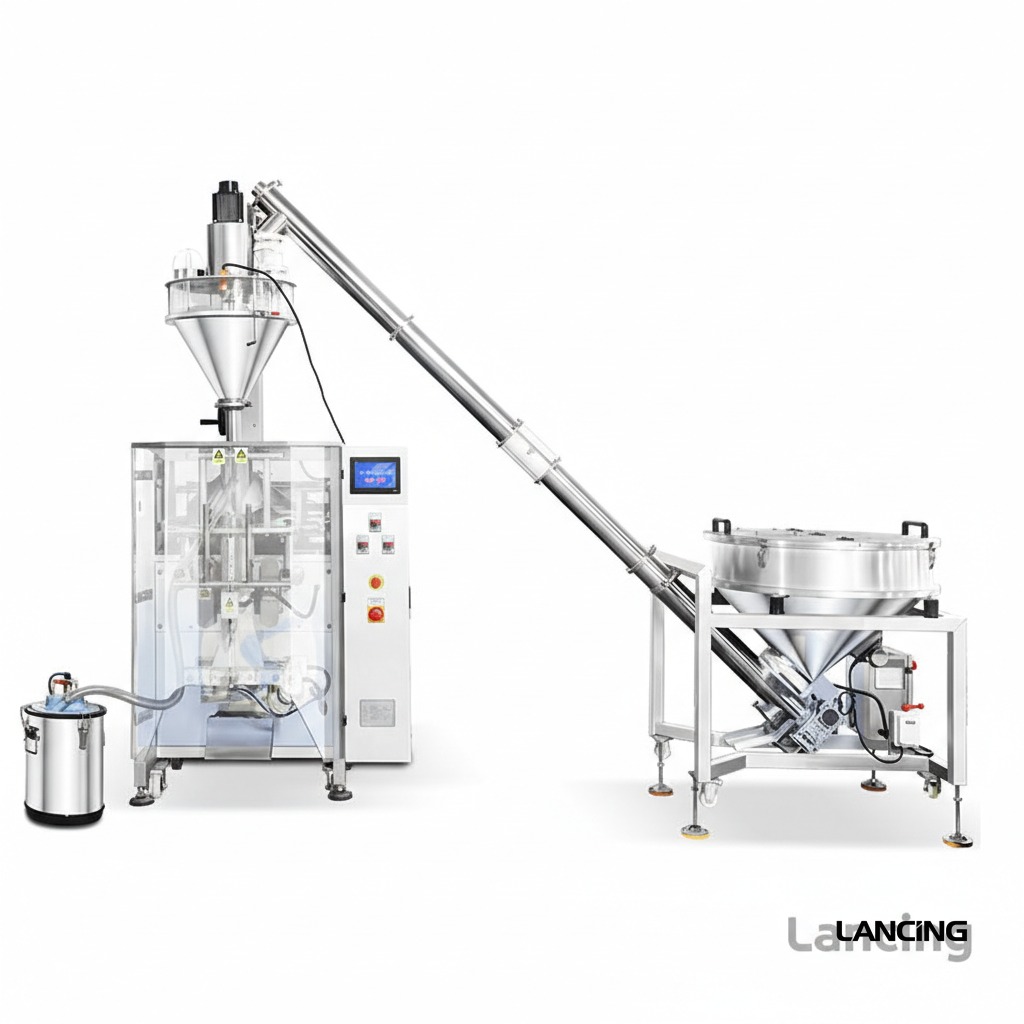
Specify the finished bag, film and forming set together.
Provide the film structure, thickness, reel dimensions, print repeat, intended seal pattern and finished bag dimensions. The forming collar and tube must suit the bag width and product flow, while sealing temperature, pressure and dwell depend on the actual film. A published machine range does not prove that every film and bag combination will run at the same output.
Synchronise dosing with film movement and sealing dwell.
The dose must complete inside the available machine cycle without product entering the jaws or pulling the film out of position. Fine powder may remain airborne after discharge; a large dose may need more time to settle. Test the actual product at the intended fill volume and bag length, and record both weight performance and finished-seal quality during a sustained run.
| Observed issue | Possible process boundary | Evidence to collect |
|---|
| Powder in the seal | Excess free fall, airborne dust, poor timing, insufficient settling or extraction in the wrong position. | Slow-motion or frame-by-frame video of dose completion and jaw closure, plus seal inspection through the run. |
| Variable bag length or registration | Film tracking, print-mark sensing, reel tension, forming resistance or product pulling on the film. | Bag dimensions and registration checks at start-up and sustained speed. |
| Wrinkled or incomplete seal | Film mismatch, jaw contamination, temperature, pressure, dwell or pack contents obstructing the seal. | Recorded film specification, machine settings and inspected samples from the agreed run. |
| Unstable dose timing | Hopper feed, auger or weigh-cycle variation, refill events or an unrealistic cycle target. | Dose-complete timing and weight statistics before, during and after a representative refill. |
Keep dust-control measures compatible with the seal process.
Extraction should remove airborne material without pulling product from the dose or disturbing the film. Review fill-tube position, free-fall distance, product velocity, bag support and jaw area. Inspect the seal internally and externally; a bag can appear closed while powder contamination has reduced the useful seal area.
Measure film and product changeover as one sequence.
Record reel change, film threading, forming-set change, recipe selection, dosing-tool change, hopper cleanout, print registration and first-bag approval. For deeper VFFS and sealing detail, use Form Fill & Seal. Powderfillers.co.uk remains the parent comparison site where the choice between rigid containers, premade pouches and roll-film bags is still open.