


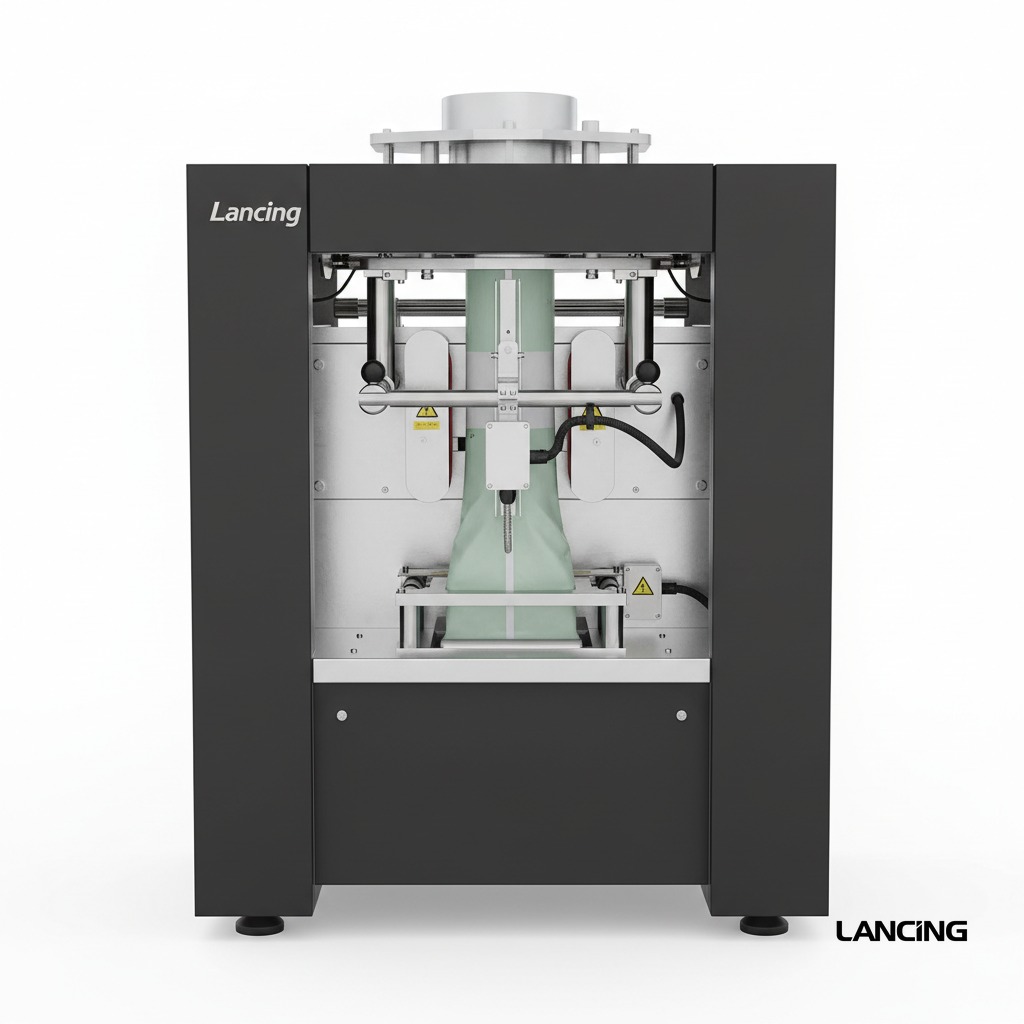
Define the sustained finished-pack rate, not only the filler cycle.
A powder line can stop because the filler is waiting for product, a container is unstable, a closure has not arrived, dust has affected a sensor or a downstream machine cannot clear the pack. Build the rate model around the slowest stable stage using the actual fill weight and pack. Include hopper replenishment, settling time, normal checks, coding and accumulation rather than quoting an isolated machine maximum.
| Line stage | Interface to define | Evidence to prove |
|---|---|---|
| Product feed | Minimum and maximum hopper level, refill signal, transfer method, dust connection and prevention of overfilling. | Stable dosing before and after a representative refill without uncontrolled aeration or compaction. |
| Container or pouch presentation | Pitch, orientation, opening control, no-pack/no-fill logic, fill height and recovery from a missing or misaligned pack. | Repeatable presentation across the smallest and largest intended format. |
| Dosing | Recipe, tooling, permissives, fill-complete signal, fault state and reject or check strategy. | Recorded fill results under the agreed product, target, hopper and line conditions. |
| Settling and closing | Dwell, vibration where suitable, headspace, dust exclusion, cap or seal arrival and closure verification. | Acceptable closure or seal condition during a sustained run, including normal dust and refill events. |
| Labelling, coding and checking | Pack-present signals, code trigger, recipe identity, reject confirmation and accumulation behaviour. | Correct code and label on an acceptable pack, with rejected packs positively separated where that function is included. |
Agree control ownership and recovery states before equipment is built.
Define which machine is the line master, how upstream and downstream equipment exchange ready, run, stop and fault conditions, and what happens after an emergency stop or loss of product. A useful functional description covers no-pack/no-fill behaviour, blocked discharge, hopper-low request, closure absence, reject confirmation and recipe selection. The detail should match the final scope; it should not assume that every optional function is included.
Treat cleaning and cross-contamination as a line-wide route.
Residue can remain in product transfer equipment, extraction points, the filler, settling devices, conveyors, closing equipment and guarding. Map the product path and agree the cleaning boundary for each SKU family. Identify which parts are removed, where they are cleaned, how open ends are protected and what line-clearance check is required before restart. For powders with different colours, allergens, active ingredients or chemical incompatibilities, the segregation requirement should be stated before the layout is fixed.
Use a staged acceptance plan.
Start with component checks, then prove each interface, then run the integrated sequence with the representative product and pack. Record the agreed fill statistics, finished-pack output, stoppages, refill behaviour, seal or closure quality, coding, rejects, changeover and cleaning access. Where the final result depends on site utilities or upstream production equipment, identify that dependency in the acceptance record.