Describe the ingredient as a physical product, not only a recipe name.
Fine flour, sugar, seasoning, protein blend and drink powder can differ in dust, oil content, static, density, particle distribution and sensitivity to aeration. Provide the production-intent blend and explain whether it settles, separates, clings, compacts or absorbs moisture. Where a blend contains particles of different sizes or densities, check whether transfer, hopper residence and agitation alter the composition through the run.
Define the food-contact and cleaning boundary for the complete route.
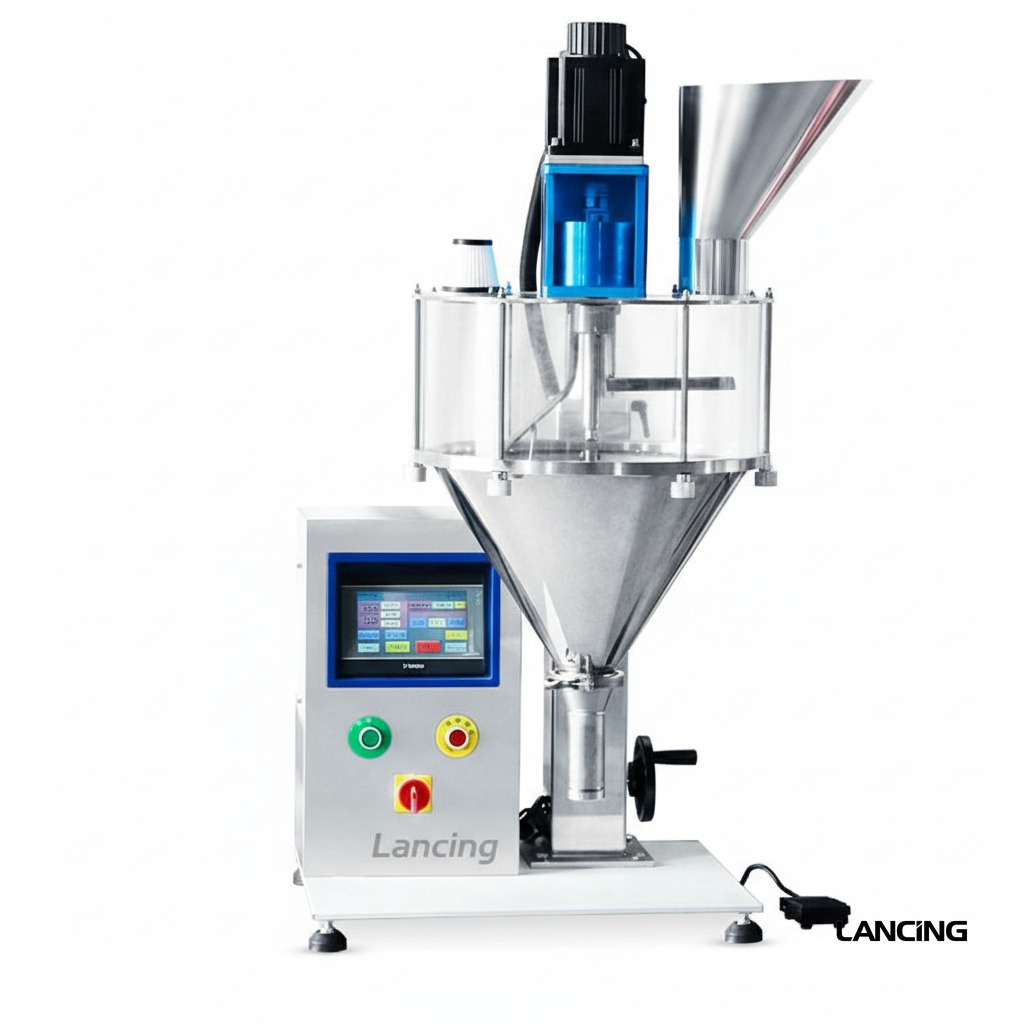
List every surface touched by product, including feeders, hopper, auger or weigh parts, nozzle, settling equipment and extraction connections. State the site cleaning method and where removable parts are taken. Contact materials, seals and finishes should be agreed for the product and cleaning regime rather than assumed from a generic machine description.
| Risk or requirement | Specification response | Acceptance evidence |
|---|
| Allergen or recipe carryover | Defined product path, removable parts, cleaning boundary, protected open ends and line-clearance check. | Documented changeover using the most difficult product sequence. |
| Fine airborne dust | Controlled fill height, containment or suitable extraction, clean closure or seal area and accessible dust collection points. | Inspection during sustained filling and after normal hopper refill. |
| Blend segregation | Minimise unnecessary transfer, review agitation and residence time, and test through the full hopper cycle. | Representative samples from the start, middle and end of the run. |
| Moisture-sensitive product | Limit exposure, define storage and sample condition, and avoid a cleaning method that is incompatible with the site process. | Trial with product handled as it will be in production. |
Measure changeover against the next product, not an abstract clean state.
Identify the product sequence that creates the highest cross-contamination risk. Record emptying, dismantling, cleaning, inspection, reassembly, recipe selection and first-pack release. Include product-feed and extraction parts as well as the filler. The specification should state what Lancing supplies and what remains part of the customer's site procedure.
Retain weight statistics and finished-pack observations.
Run the representative product at the intended target and pack. Record every fill in the agreed sequence, calculate the mean, minimum, maximum and standard deviation, and identify refills, adjustments or rejected packs. Inspect dust, spillage, headspace, closure or seal areas and any visible segregation. Do not transfer an accuracy result from one ingredient to another without a new trial condition.