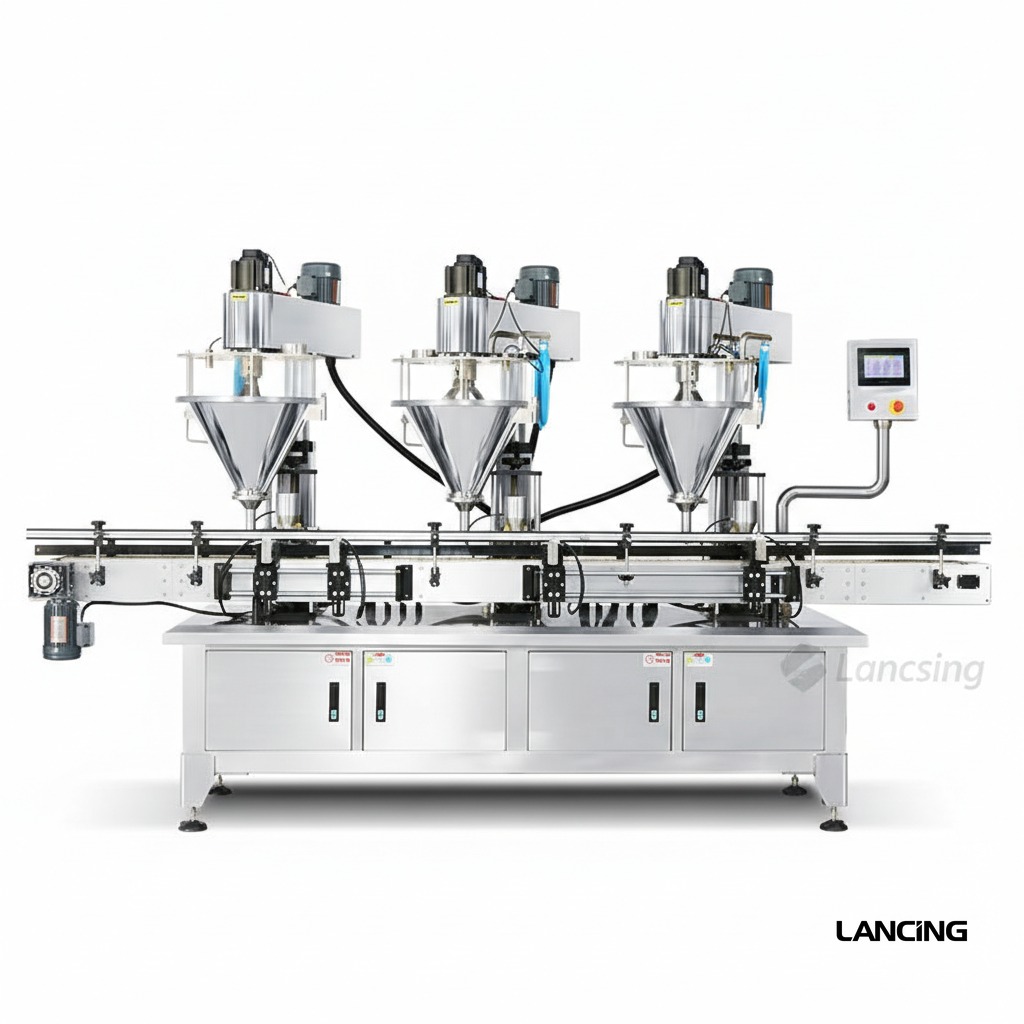
An auger filler meters a controlled volume. The screw diameter, pitch, tube clearance and number of rotations must suit the volume represented by the target weight at the expected bulk density. A very wide dose range may need more than one screw set so that both the smallest and largest fill can be produced without an impractical number of rotations or an excessively coarse dose increment.
The pack opening and fill height also influence tooling. A narrow bottle neck may restrict the nozzle and increase fill time. A large tub or open pouch may permit a wider outlet but can expose more product to air movement and dust. Where the powder floods after the screw stops, the fill head may need a controlled shut-off or a different containment approach.
Stabilise the hopper before judging the auger.
Bridging, ratholing, compaction and aeration change the quantity of material available to the screw. Agitation can help some cohesive powders but may compact, damage or segregate others, so it should be selected from observation rather than added automatically. Test at realistic high and low hopper levels and include the intended refill method. A refill that drops product from height or transfers it pneumatically can temporarily change density and dust behaviour.
| Set-up area | Question to answer | Evidence |
|---|
| Screw and tube | Does the tooling cover the target without excessive rotations, coarse increments or product damage? | Recorded fills at the minimum, nominal and maximum intended target using the actual powder. |
| Hopper and agitation | Does product reach the screw consistently without bridging, compaction or segregation? | Observation through a full hopper cycle and a representative refill. |
| Fill head | Can the dose enter the pack cleanly without uncontrolled run-on or excessive free fall? | Dust, spillage, headspace and pack-mouth inspection at the intended fill height. |
| Control recipe | Are coarse and fine dosing, delays and refill states repeatable for each SKU? | Saved settings linked to an identified screw set, product and pack. |
Prove repeatability across start-up, stable running and refill.
Agree the target average and individual tolerance, then record every fill in the test sequence. Keep the screw, hopper level, agitation, pack and measurement method in the record. Calculate the mean, minimum, maximum and standard deviation, and identify any start-up, adjustment or rejected fills. The report should also state whether dust, product run-on or pack instability caused a rejection even when weight was acceptable.
Review the complete product path for cleaning and changeover.
Check access to the hopper, agitator, screw, tube, nozzle, seals and any feeder or extraction connection. List the parts that must be removed and whether the site uses dry cleaning, wipe-down or another agreed procedure. For incompatible powders, allergens, colours or active materials, define the line-clearance boundary and the inspection needed before restart.
Specialist ownership:Powderfillers.co.uk compares auger, weigh and pack-format routes. For deeper auger machine-family information, use Auger Fillers UK.